Our History
A Congregational church was first organized in New Haven on November 15, 1797, as early settlers gathered for worship and community life. In those early years, residents met in temporary spaces and shared meetinghouses that served both civic and religious purposes before dedicated church buildings were established.
The first permanent church was built in 1812 on the green, and was destoryed by fire in 1888.
In 1890, a new church building was constructed on Town Hill Road. Designed by prominent Vermont architect and builder Clinton Smith, the Victorian-era structure became an important part of the village landscape.
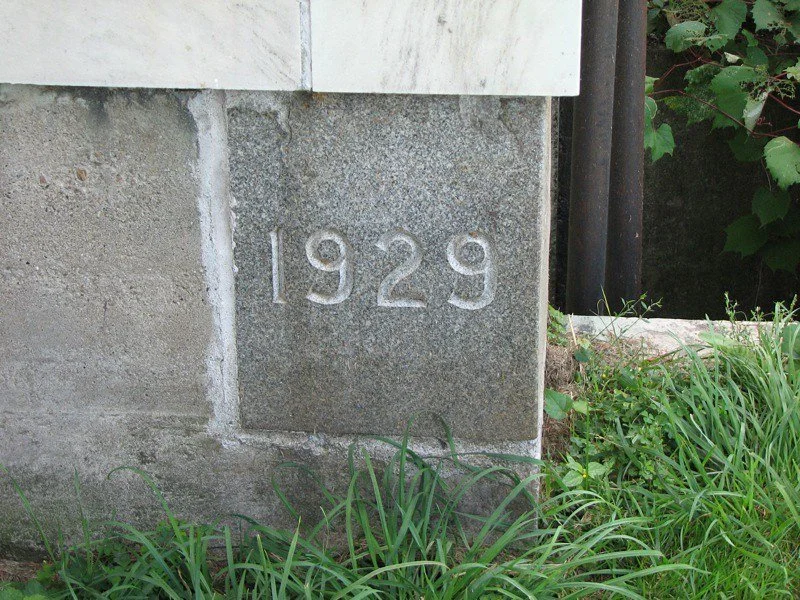
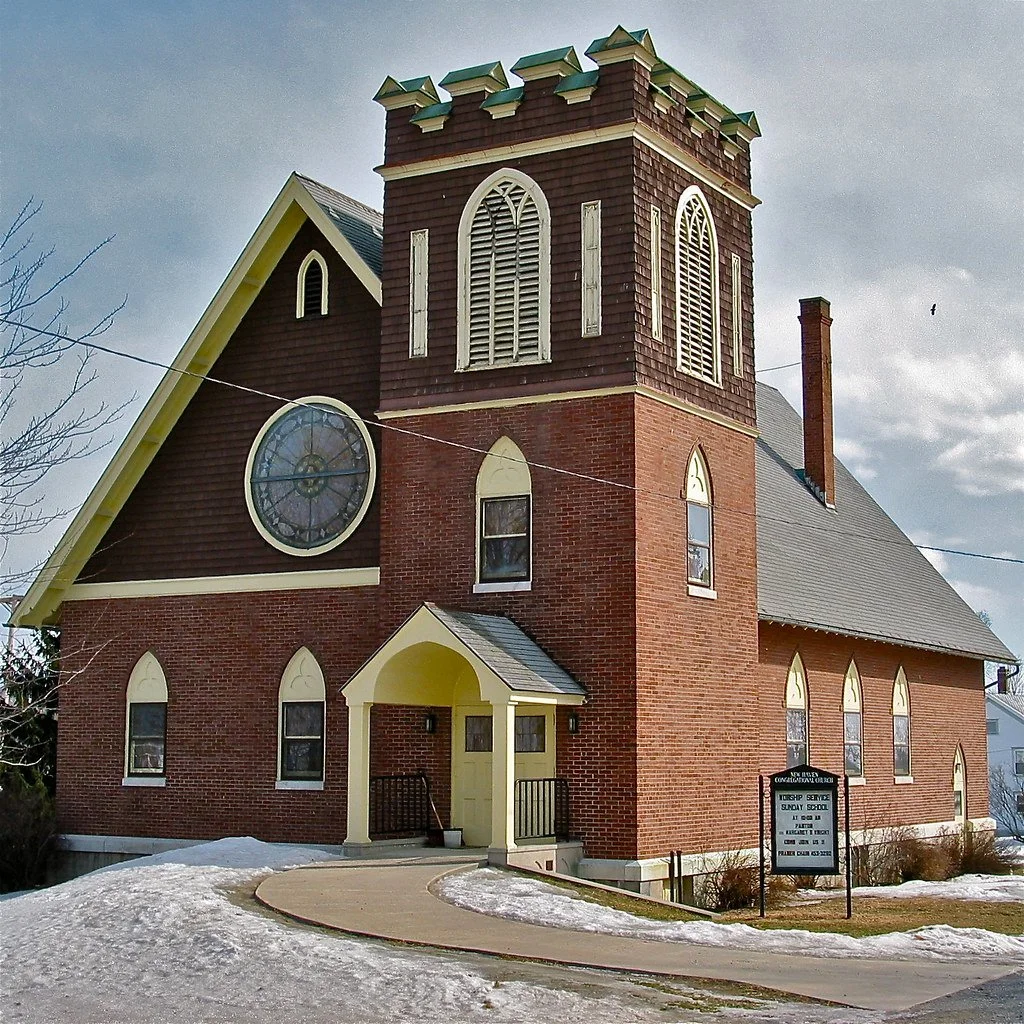
That building in turn was badly damaged by fire in 1929. The congregation rebuilt, creating the brick Neo-Gothic Revival church that stands today. The building features a side tower, rose window, pointed arch windows, and a crenellated parapet, and it is listed on the Vermont State Register of Historic Places.
The Union Church of New Haven Mills
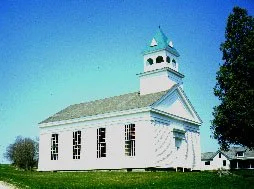
The history of New Haven Congregational Church is closely connected to the historic Union Church of New Haven Mills, located a short distance away in the New Haven Mills village. Built in 1851, the Union Church served as a shared meetinghouse for members of several Christian traditions during a time when the village was a thriving mill community. It was one of two buildings not destroyed by fire and floods the early 20th century.
In 1929, the same year New Haven Congregational was rebuilt, the local community, including some NHCC members, incorporated the Union Church of New Haven to preserve the building that now stood empty and unused.. In 1943 Middlebury College student Burt Rolfe worked for two summers with a group of students repairing the structure. Prior to World War II Rolfe also conducted occasional services promising "Someday I will fill this church," following his wartime duty. Rolfe was killed on a European battlefield a month later and the church was filled for his memorial service in honor of his dedication to the Union Church.
NHCC members are central to current efforts to preserve the Union Church and organize regular summer services and occasional events to promote appreciation of this historic and architectural gem, a reminder of the intersection of faith and community life.